AI Agent Memory: The Solution for Better Recall and Efficiency

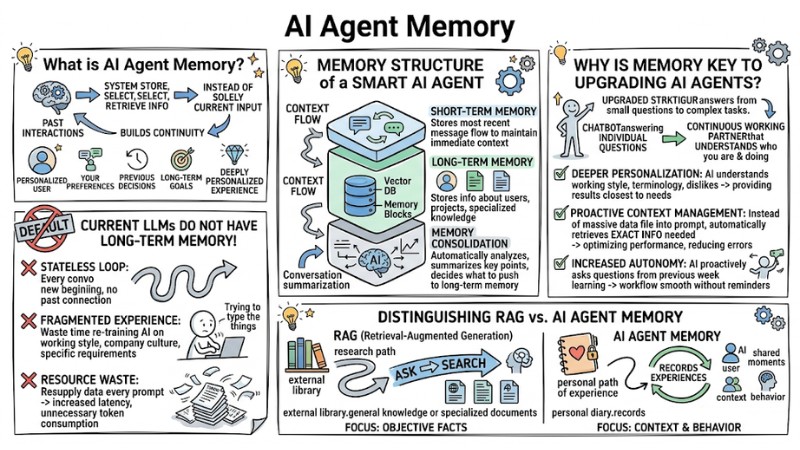
Do you often have to repeat instructions, re-explain personal preferences, or remind AI about old projects every time you open a new chat session? This happens because most current AI systems still operate in a "stateless" manner, not truly remembering anything about you between interactions. This article will help you clearly understand AI Agent Memory - The key technology that transforms AI from a mere Q&A tool into a true working partner that can remember, accumulate experience, and accompany you long-term.
Key Takeaways
- Concept of AI Agent Memory: Understand the nature of the technology that helps AI remember, accumulate experience, and maintain continuity across work sessions, overcoming the "stateless" nature of standard AI systems.
- Distinguishing Context Window and Memory: Identify the difference between short-term memory (serving the current session, resource-intensive) and long-term memory (sustainable storage, cost-effective, deep personalization).
- 3-Layer Structure: Master how to design memory systems from short-term (cache) and long-term (Vector DB) to consolidation mechanisms for selecting important information.
- The Value of Upgrading AI: AI is no longer just a chatbot but becomes an autonomous partner that knows how to manage context, proactively ask questions, and deeply understand user habits and working styles.
- Distinguishing RAG from Memory: Clearly differentiate between RAG (an objective external knowledge library) and Memory (a personal experience log) to combine them harmoniously for the perfect AI.
- Optimization Techniques: Use recursive summarization, selective forgetting, and intent-based retrieval to keep the system lean, accurate, and free from data overload.
- FAQ: Capture how to manage security, control memory access, and begin experiencing AI capable of learning to optimize work productivity.
What is AI Agent Memory?
AI Agent Memory is the capability that helps a system store, select, and retrieve information from past interactions. Instead of responding solely based on current input data, the AI can build continuity in conversation. It helps the AI remember your preferences, previous decisions, and long-term goals, creating a deeply personalized experience.
Current Large Language Models (LLMs) do not have long-term memory by default. Every time you start a new chat session, the AI treats you like a stranger. Specifically:
- Stateless Loop: Every conversation is a new beginning, with no connection to the past.
- Fragmented Experience: You waste time "re-training" the AI on your working style, company culture, or specific requirements.
- Resource Waste: Having to resupply data in every prompt increases latency and consumes unnecessary token limits.
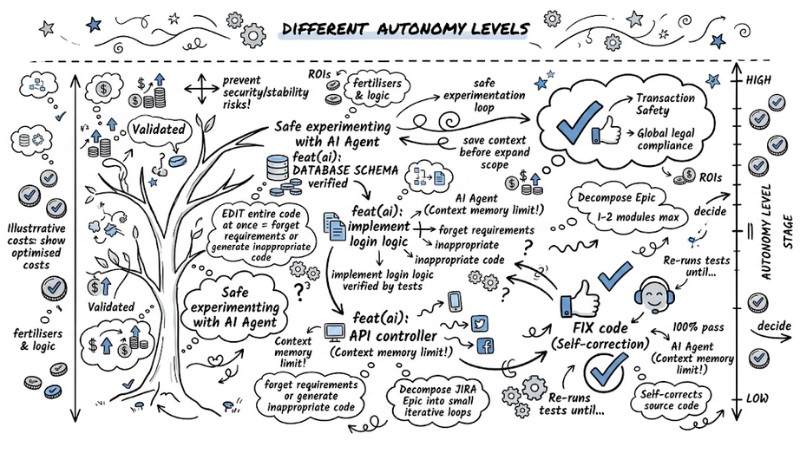
Illustration of a conversation thread cut between work sessions
Distinguishing Context Window and Memory
Many people mistakenly believe that simply increasing the "Context Window" size - the amount of data an AI can read at one time is enough. In reality, they serve two different purposes:
| Feature | Context Window (Short-term) | Memory (Long-term) |
|---|---|---|
| Scope | Only within the current chat session. | Across many sessions and days. |
| Storage | Temporary; lost when the chat is reset. | Sustainable; stored in a database. |
| Cost | Expensive (increases with token count). | Low (optimizes important information). |
| Capability | Deep analysis of current content. | Remembering personal preferences. |
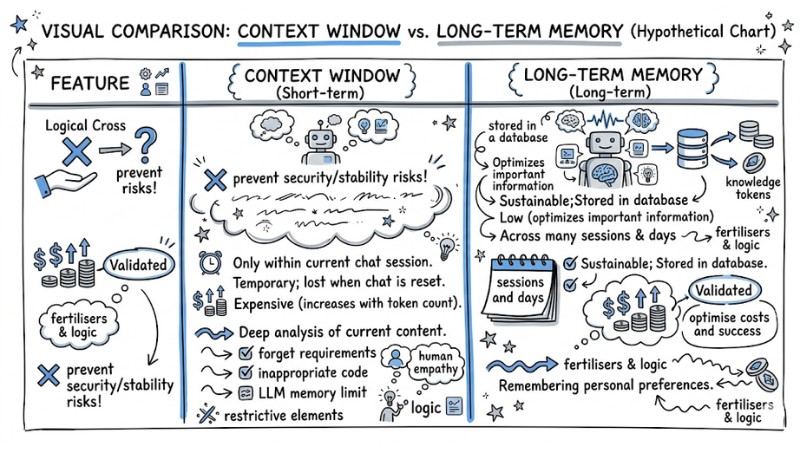
Compare Context Window and Long-term Memory
Memory Structure of a Smart AI Agent
An effective memory system is not about trying to save everything, but knowing how to select and organize what truly needs to be remembered. Typically, an AI Agent's memory is designed in 3 layers:
- Short-term Memory: Stores the most recent message flow to maintain immediate context.
- Long-term Memory: Uses vector databases (Vector DB) to store information about users, projects, or specialized knowledge in the form of "Memory Blocks."
- Memory Consolidation: An AI mechanism that automatically analyzes the conversation, summarizes key points, and decides which information is important enough to push into long-term memory.
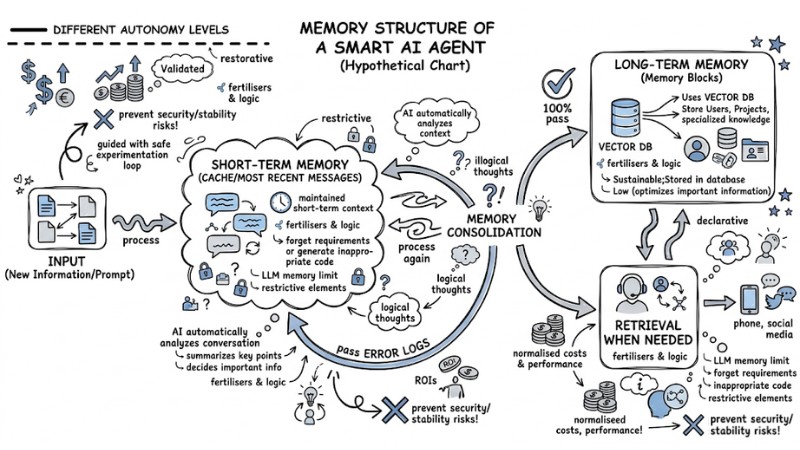
Memory Structure of a Smart AI Agent
Why is Memory the Key to Upgrading AI Agents?
Memory upgrades AI from a "chatbot answering individual questions" into a continuous working partner that understands who you are and what you are doing. Details include:
- Deeper Personalization: AI understands how you work, the terminology you use, and what you dislike, thereby providing results closest to your needs.
- Proactive Context Management: Instead of throwing a massive data file into a prompt, the AI automatically retrieves the exact information needed, optimizing performance and reducing errors.
- Increased Autonomy: AI can proactively ask questions based on what it learned from the previous week, helping the workflow proceed smoothly without reminders.
Distinguishing Between RAG and AI Agent Memory
RAG and Memory are often confused because both are methods of providing information, but their natures differ:
- RAG (Retrieval-Augmented Generation): Like an external library. You ask, and the AI searches for general knowledge or specialized documents to answer. It focuses on objective facts.
- AI Agent Memory: Like a personal diary. It records the experiences between you and the AI and focuses on context and behavior.
Experience: For a perfect AI Agent, you need the combination: RAG provides foundational knowledge, while Memory provides the personal experience.
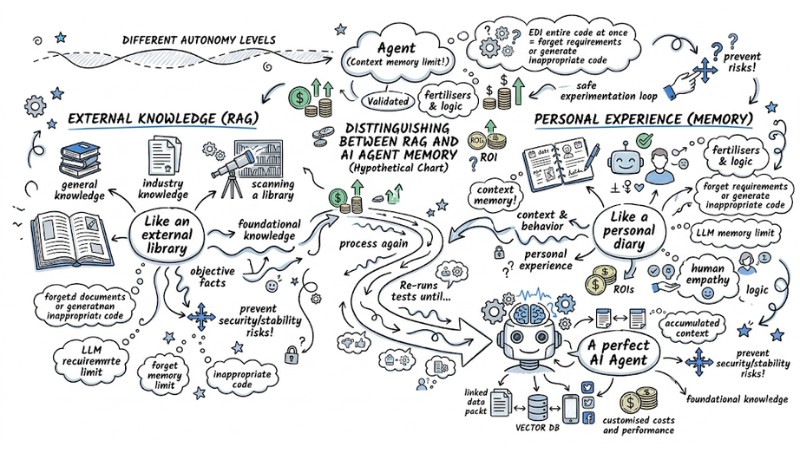
The combination of external knowledge (RAG) and personal experience (Memory)
Popular Memory Operation Techniques
To prevent the AI from being "overwhelmed" by junk data, you can operate memory using several techniques:
- Recursive Summarization: Automatically summarizes old conversations when they become too long, keeping only the important main points.
- Selective Forgetting: The AI will automatically "delete" or downgrade the priority of information that is old or no longer useful to make room for new data.
- Intent-based Retrieval: When you ask, the AI doesn't just look for keywords but analyzes intent to retrieve the most relevant “Memory Block.”
Frequently Asked Questions Related to AI Agent Memory
What is AI Agent Memory?
AI Agent Memory is the capability of an AI agent to store and retrieve information over time, tasks, and multiple user interactions. It helps the AI achieve continuity, learning, and personalized experiences.
Why does current AI still frequently forget who you are?
Most current AI operates in "stateless" mode, meaning each interaction session is independent and does not remember what happened before, forcing you to repeat information.
How is Context Window different from Memory in AI?
The Context Window contains temporary information for the current session, while Memory is long-term storage, allowing the AI to remember knowledge and preferences across many sessions, helping with personalization and performance improvement.
How can an AI Agent remember information effectively?
An AI Agent uses multiple techniques like recursive summarization, selective forgetting, and structured storage (like vector databases) to distill and manage important information.
Should I trust an AI Agent with Memory regarding personal data?
Trust depends on the provider's security policy. Advanced Memory systems usually have encryption and access control mechanisms to protect user data.
How does an AI Agent learn and improve from old experiences?
Through AI Agent Memory, the AI can analyze interaction history and recognize behavioral patterns and user preferences to provide more appropriate responses and actions in the future.
Is RAG (Retrieval-Augmented Generation) the same as AI Agent Memory?
Not exactly. RAG helps AI retrieve external knowledge to answer questions, while Memory helps AI recall experiences, personal preferences, and maintain continuity in interactions.
Does AI Agent Memory help increase response speed?
Yes, Memory can help the AI retrieve relevant information faster instead of re-processing the entire history or searching externally, thereby reducing latency.
Does AI memory expose personal information?
Modern AI systems allow you to control memory. You have the right to ask the AI to forget specific information or delete the entire memory at any time.
Does using an AI Agent with memory increase response time?
There is a slight latency when the AI must search in long-term memory, but current optimized systems (like caching) have reduced this to nearly instantaneous levels.
How do I start using an AI with memory?
Try platforms that support AI Agents like Mem0 or built-in "Memory" features in advanced AI applications. You will see the AI start learning from you after just a few hours of interaction.
Read more:
- How to Test AI Agents: Process and Performance Evaluation Methods
- AI Agent Best Practices: A Guide to Building Autonomous Systems
- Debugging AI Agents: A Workflow from JSON Logs to Visualization
AI Agent Memory is the foundation that helps AI switch from "forgetting immediately after each chat session" to a partner that can remember, learn, and accompany you long-term. By properly combining short-term context windows, long-term memory using Vector DBs, and smart selection/summarization mechanisms, you gain a deeply personalized system while optimizing costs and performance. If designed correctly, Memory will become a core competitive advantage, helping the AI understand you better after every interaction instead of forever remaining a chatbot that answers individual, disjointed questions.
Tags